

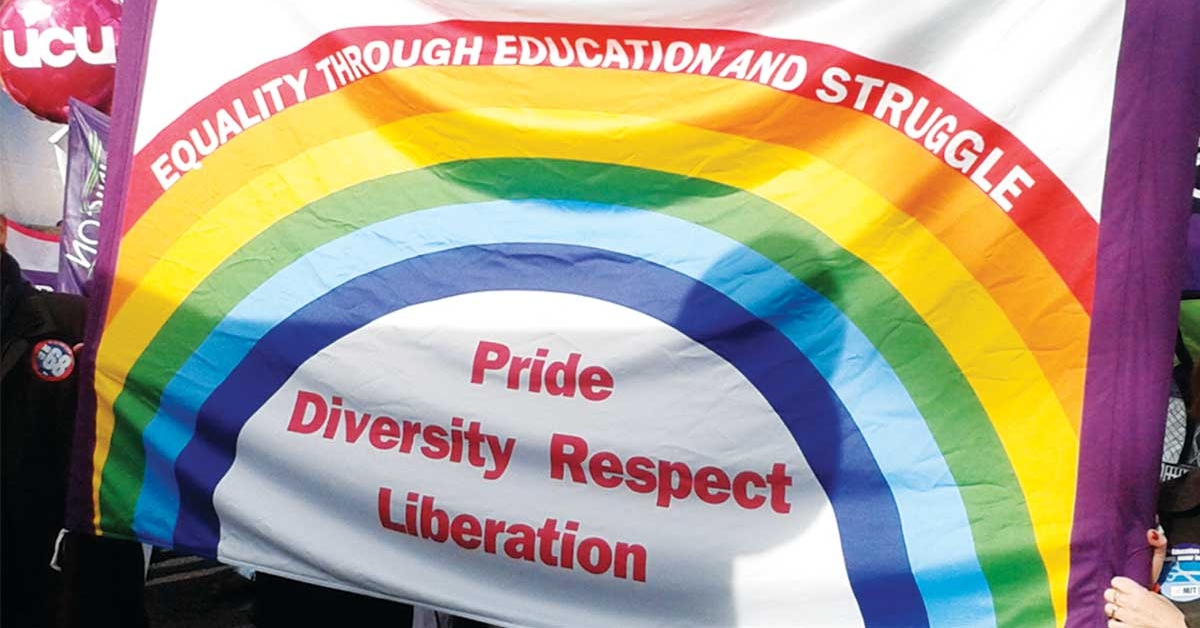
Equality
29 October 2024
UCU has put equality at the heart of its activities on behalf of its members.
Many UCU branches have equality officers who can assist you if you have any concerns on an equality-related issue. Otherwise your UCU departmental rep or other branch officer will be able to help. To find out if there is an equality officer at your branch and how to contact them ask your departmental rep or branch secretary/president. If you don't know how to contact any local UCU representative contact your regional office.
 Important dates in the equality calendar
The local contact finder will give you details of the relevant branch officer for your institution.
Equality and policy unit
UCU has a national team of staff with expertise and involvement in the whole equality agenda. They implement the policies and priorities determined by members through the democratic lay structures'.
- Mary Meekings - National Head of Equality and Policy lead for migrant members
- Seth Atkin - Equality Support Official with specialism for lesbian, gay, bisexual and trans equality and age equality
- Charlotte Nielsen - Equality Support Official with specialism for gender
- Chris Nicholas - Equality Support Official with specialism for race and religion or belief
- Sharon Russell - Equality Support Official with specialism for disability
- Swati Patel - Administrator
If you have a general equality query, or to join one of our equality network mailing lists (black, disabled, LGBT+, migrant and women & members) contact eqadmin@ucu.org.uk
If you think you might be interested in becoming a UCU equality officer you can find out more about what is involved on the Equality reps page.
About UCU's equality work
If you have a general equality query, contact eqadmin@ucu.org.uk
UCU has negotiated national equality agreements in both HE and FE (see pay and conditions section) which branches/LAs strive to get implemented locally. The National Equality and Policy Unit (see above) supports branches/LAs and regional offices on equality issues and work to influence government policy on equality.
The union provides many opportunities for members to become involved in our equality work. UCU organises events specifically for black, disabled, LGBT+, migrant and women members. We also have email lists for each of these groups which you can join by emailing eqadmin@ucu.org.uk.
Helping out at a local level is a great way to promote equality at your workplace - you don't necessarily need to become an equality officer, just an offer to circulate newsletters or put up posters for example will be appreciated. See How do I get involved? for more information. If you do think you might be interested in becoming a UCU equality officer you can find out more about what is involved on the Equality reps page.
UCU policy on equality is determined democratically by our members,
- through reserved seats on the national executive committee
- an elected equality committee
- and yearly conferences.
While our prime concern is to fight for greater equality at work, we also strive to campaign against injustices members face in other areas of their lives, whether on grounds of sex, race, disability, sexual orientation, gender identity, being a migrant, religion or belief, age or any other aspect of identity which can lead to discrimination.
Support
If you are experiencing discrimination or harassment at work see the Equality advice and guidance for advice on getting support.
If you have a problem and need your union's help, your first step should always be to contact your local branch.
Our dealing with problems page offers some basic advice on resolving problems at work. Please be aware that time limits can apply, so please don't delay if you need to raise an issue.
 Getting involved in equality
The UCU equality conference is held each year in November/December. The current format is for the conference to include four separate sessions for black members; disabled members, LGBT members and women members. During those sessions, the conference will elect members to the four national equality standing committees. These are:
- Black Members Standing Committee (BMSC)
- Disabled Members Standing Committee (DMSC)
- LGBT+ Members Standing Committee (LGBT+MSC)
- Migrant Members Standing Committee (MMSC)
- Women Members Standing Committee (WMSC)
There are 12 members of the BMSC, DMSC, LGBT+MSC and MMSC and 15 members of the WMSC.
The main objectives of each committee is to advise and make recommendations to the National Executive Committee of the union on issues specific to the members whom they represent.
For example:
- the BMSC is advising the NEC on actions and initiatives that will ensure Black members are visible in all aspects of the union's work including establishing regional networks
- the DMSC has advised the NEC on reasonable adjustments at work for disabled workers
- the LGBTMSC has advised the NEC on the issues for LGBT+ staff working abroad
- the MMSC advises NEC on issues for migrant staff
- the WMSC is advising the NEC on the impact of sexual harassment at work.
The committees also plan the agenda for their conference every year and also participate in the TUC national equality conferences. The committees can also put motions to UCU Congress and the sector conferences which ensures the issues facing equality groups are visible in our core campaigns and policies. Members of the committees are also encouraged to participate in their branches and regions so equality knowledge and expertise is shared across the union.
To be on the committees you must self-identify as belonging to that equality group. For example, to be on the DMSC, you must self-identify as a disabled worker. All levels of experience of being active in the union are welcome as the committees provide support and guidance to all members, working together collectively.
To find out more, please contact a member of the Equality and Policy team who would be happy to speak to you. Please email: eqadmin@ucu.org.uk
The annual young members' conference is open to any member aged 35 or under. The conference does not have decision making powers and is non-resolutionary but aims to bring younger members together and showcase campaign work and resources available. For further information contact campaigns@ucu.org.uk
Find further information on our work for young members here.
UCU via its regional structure has been establishing regional retired members' branches.
National Executive Committee
Women members
There are a minimum number of NEC seats that must be filled by women. The total number of seats a geographical constituency has on the NEC depends on its size, but of these at least one quarter to one third must be filled by women. This quota also applies to the UK-elected HE and FE seats. Of the eleven equality seats on the NEC elected directly by all members, three of these seats are for representatives of women in HE, and two for women in FE.
Black members
Of the eleven equality seats on the NEC, two are for representatives of black members, one of which must be a woman.
Disabled members
Of the eleven equality seats on the NEC, two of these are for representatives of disabled members. One must be from further education and one must be from higher education.
LGBT members
There are eleven equality seats on the NEC, two of which are for representatives of lesbian, gay, bisexual and transgender members, one from further education and one from higher education.
Migrant members
There are eleven equality seats on the NEC, two of which are for representatives of migrant staff.
- PrintPrint this page
- Share

Related pages
-
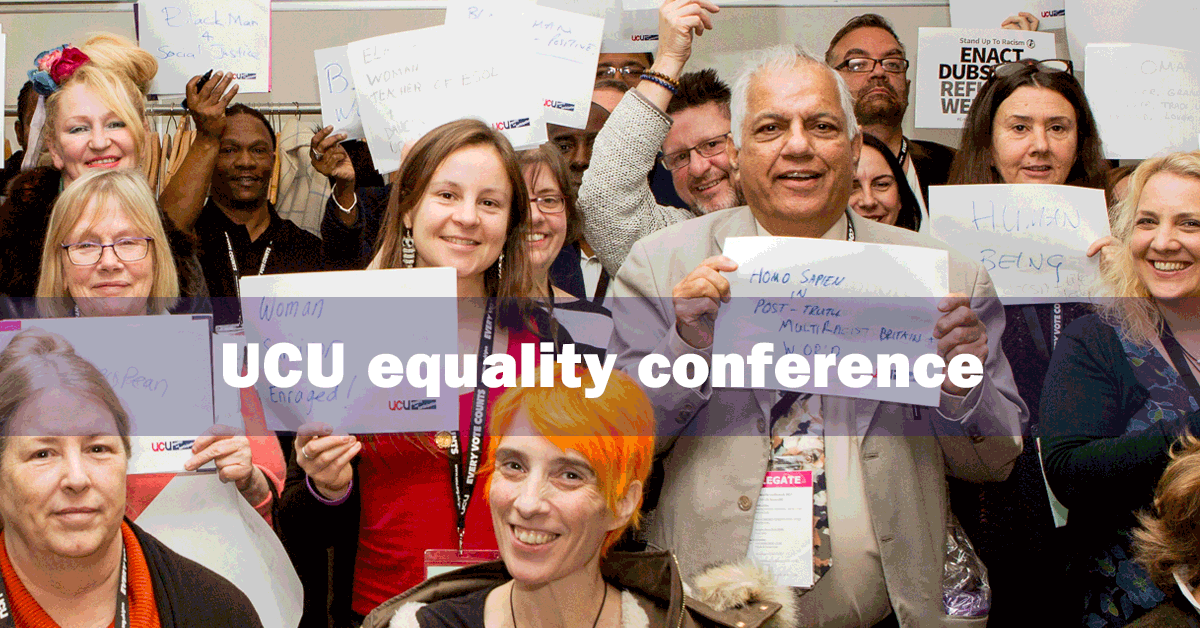 Equality groups annual conferencesUCU's annual equality conference for Black, disabled, LGBT+, migrant and women members.Read more...


